Company
Deccan AI (deccan.ai)
Industry
AI / Data Infrastructure / Enterprise SaaS
Product
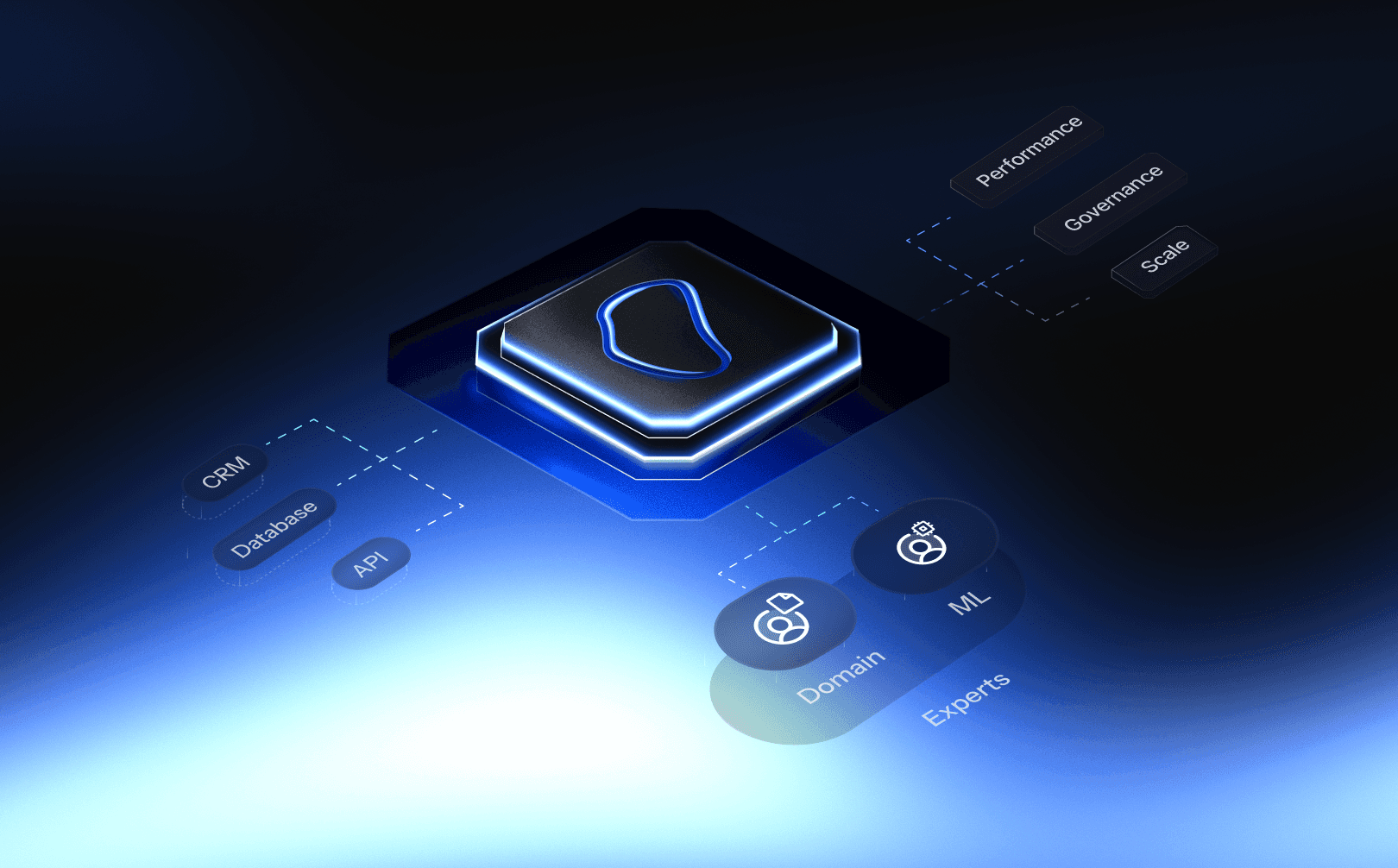
EnterpriseOS — AI-native operations platform
Challenge
New product launch needed a landing page that could sell a complex enterprise offering to CXOs and operations leaders
Solution
Landing page, collaterals, banners, posters, brand explainer video — end to end
Scope
Landing page design
Turnaround
4 days
4 Days to Make a
Complex AI Platform Feel Simple
Deccan AI had built something ambitious: EnterpriseOS — a platform that redesigns enterprise operations around AI-native workflows. Not another copilot bolted onto legacy systems. A fundamentally different operating model where AI agents handle execution at scale while domain experts continuously sharpen their accuracy.
The product was ready. The positioning was clear internally. But they needed a landing page that could communicate all of it, to CXOs, operations leaders, and compliance heads at large enterprises, in a way that felt credible, structured, and sharp.
The constraint? Four days to design it.
One Page.
Four Buyer Personas.
Zero Room for Vague AI Promises.
This wasn't a typical SaaS landing page. The challenge wasn't "make it look good." It was: how do you make a deeply technical, multi-layered enterprise product feel immediately understandable, without dumbing it down?
EnterpriseOS spans compliance, HR, support, and GCC operations. It includes a proprietary reliability layer called Helix. It has a five-step implementation methodology. It serves regulated industries that care about SOC2, ISO 27001, HIPAA, and GDPR.
That's a lot of surface area to cover on a single page — especially when the audience is enterprise buyers who are allergic to vague AI promises and have seen dozens of "AI-powered" pitches that fell apart in production.
Design Challenges:
Information architecture: How do you sequence a story that moves from problem → platform → reliability → use cases → trust signals without the page feeling like a 12-section scroll?
Enterprise credibility at first glance: The page had to feel like it belonged next to the tools these buyers already trust — not like a startup that just raised a seed round.
Technical depth without cognitive overload: Features like multi-model orchestration, evaluation infrastructure, and governed decision systems needed to be explained visually — not buried in paragraphs.
Multiple buyer personas on one page: A CRO evaluating compliance risk and an operations head evaluating workflow automation land on the same URL. The hierarchy had to serve both.
How We Designed a Page
That Sells Without Overselling
"68% of Enterprises Are Stuck in AI Pilot Mode"
— Why the Hero Opens with Pain, Not Product
The strongest enterprise pages don't open with what the product does. They open with what's broken.
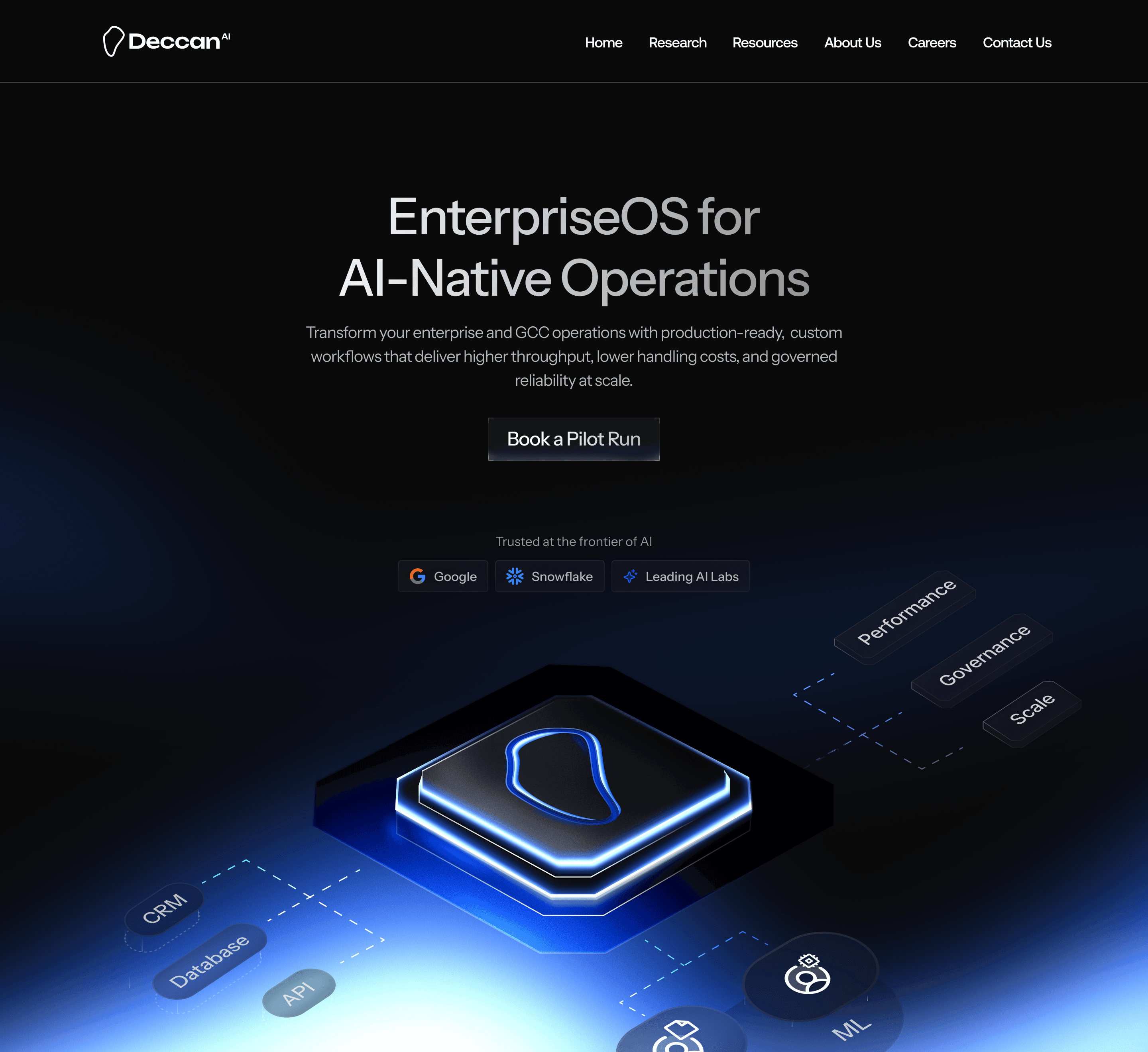
We anchored the hero around a stat that every enterprise buyer already feels: 68% of enterprises are stuck in AI pilot mode. That's not a feature pitch, it's a mirror. It earns attention because it names a pain point the reader is living through.
From there, the page builds a logical argument: here's why pilots fail → here's what AI-native operations actually looks like → here's how EnterpriseOS gets you there → here's why you can trust it.
Every Section Answers One Buyer Question or It Doesn't Exist
Enterprise buyers don't read landing pages top to bottom. They scan, stop at what's relevant, and dig in.
We designed the page in distinct, self-contained sections each answering a specific question:
"What is this?" → Platform overview with the two-layer model (agents + experts)
"How does it work?" → Five-step implementation process, visually sequenced
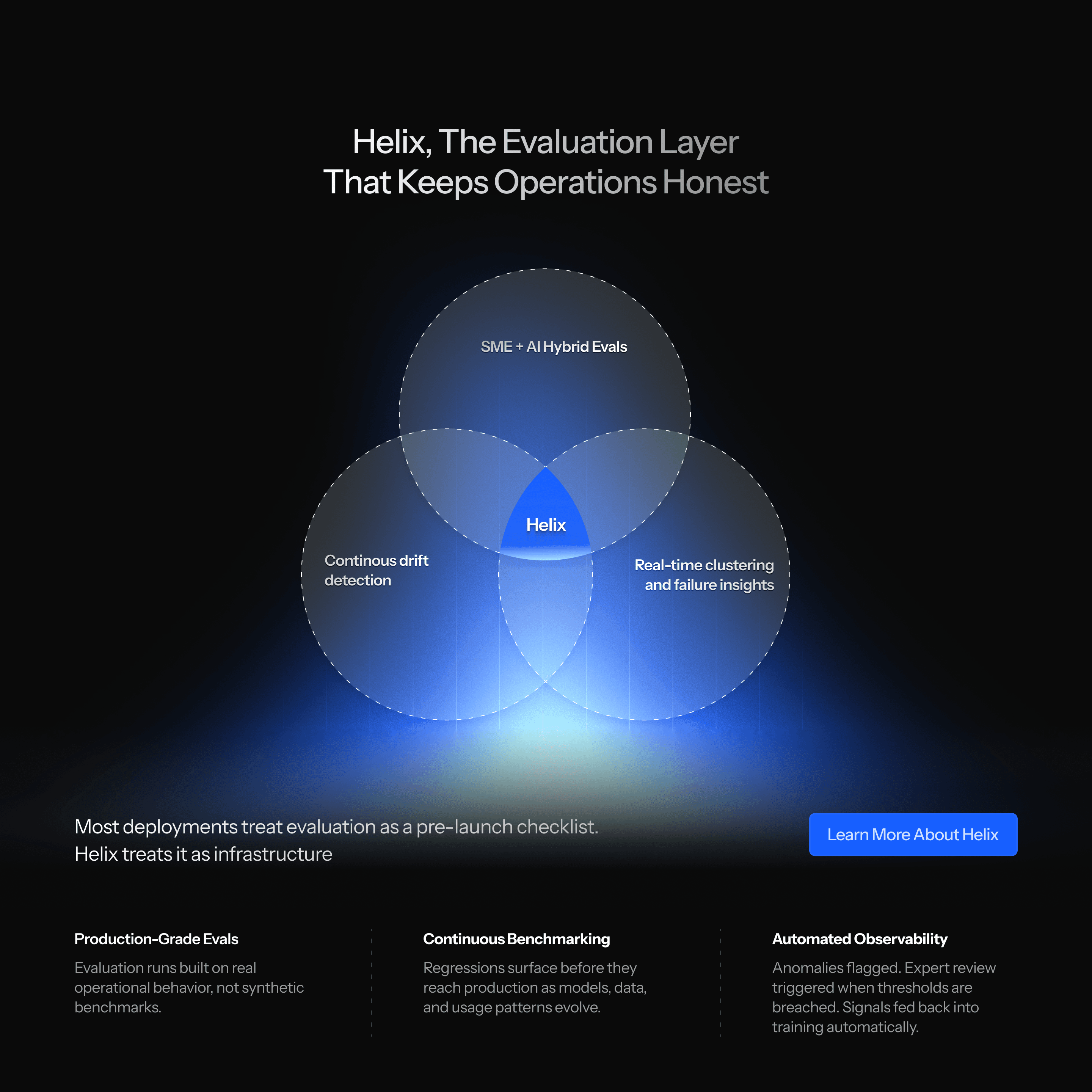
"Can I trust the outputs?" → Helix reliability layer with three capability cards
"Does it apply to my domain?" → Use case grid covering compliance, HR, support, GCC operations
"Who else uses this?" → Trust signals — Google, Snowflake, certifications, team scale
Each section works independently. A compliance head can skip straight to the Helix section and get what they need without scrolling through the implementation methodology.
Multi-Model Orchestration
Shouldn't Read Like a Whitepaper
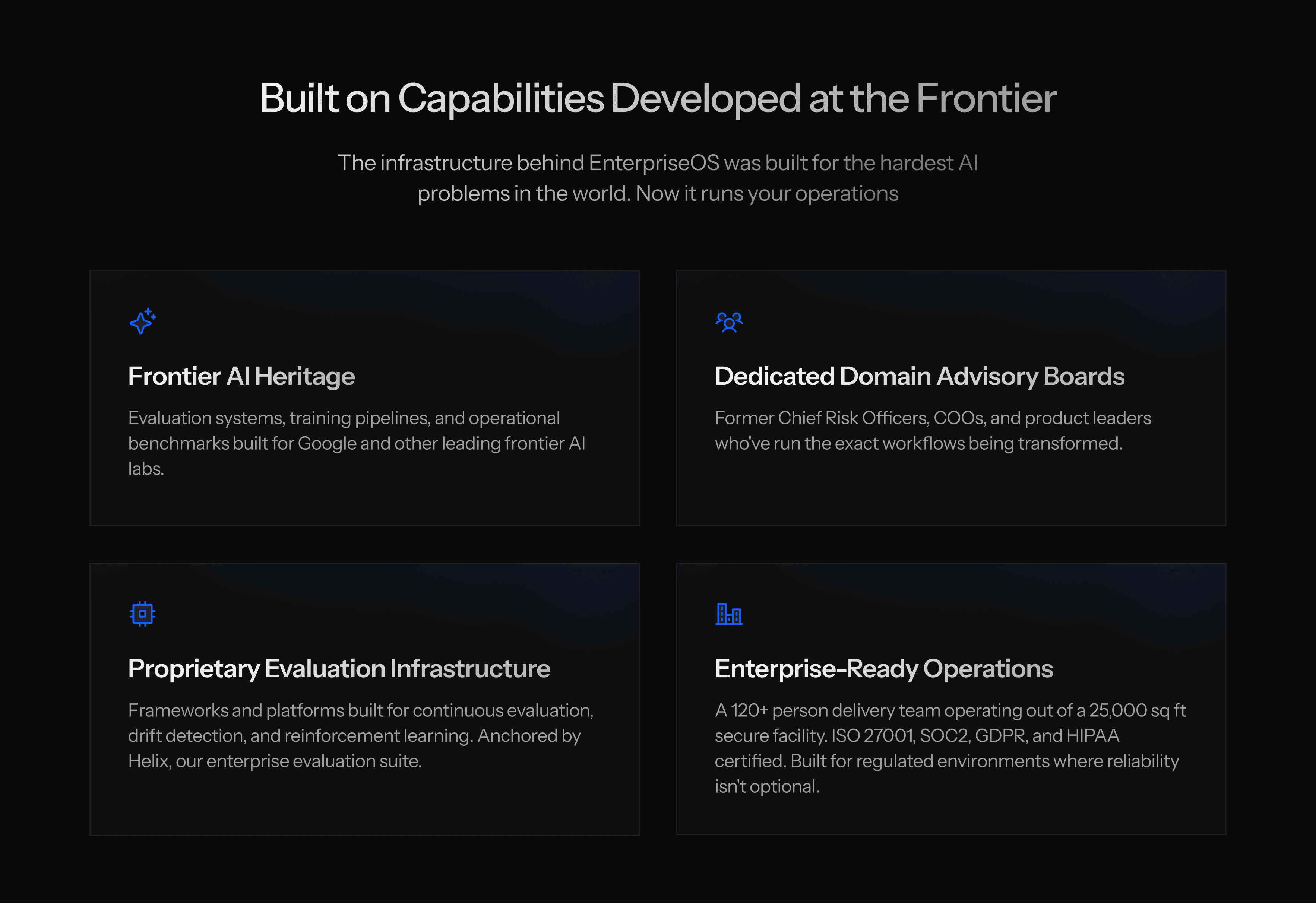
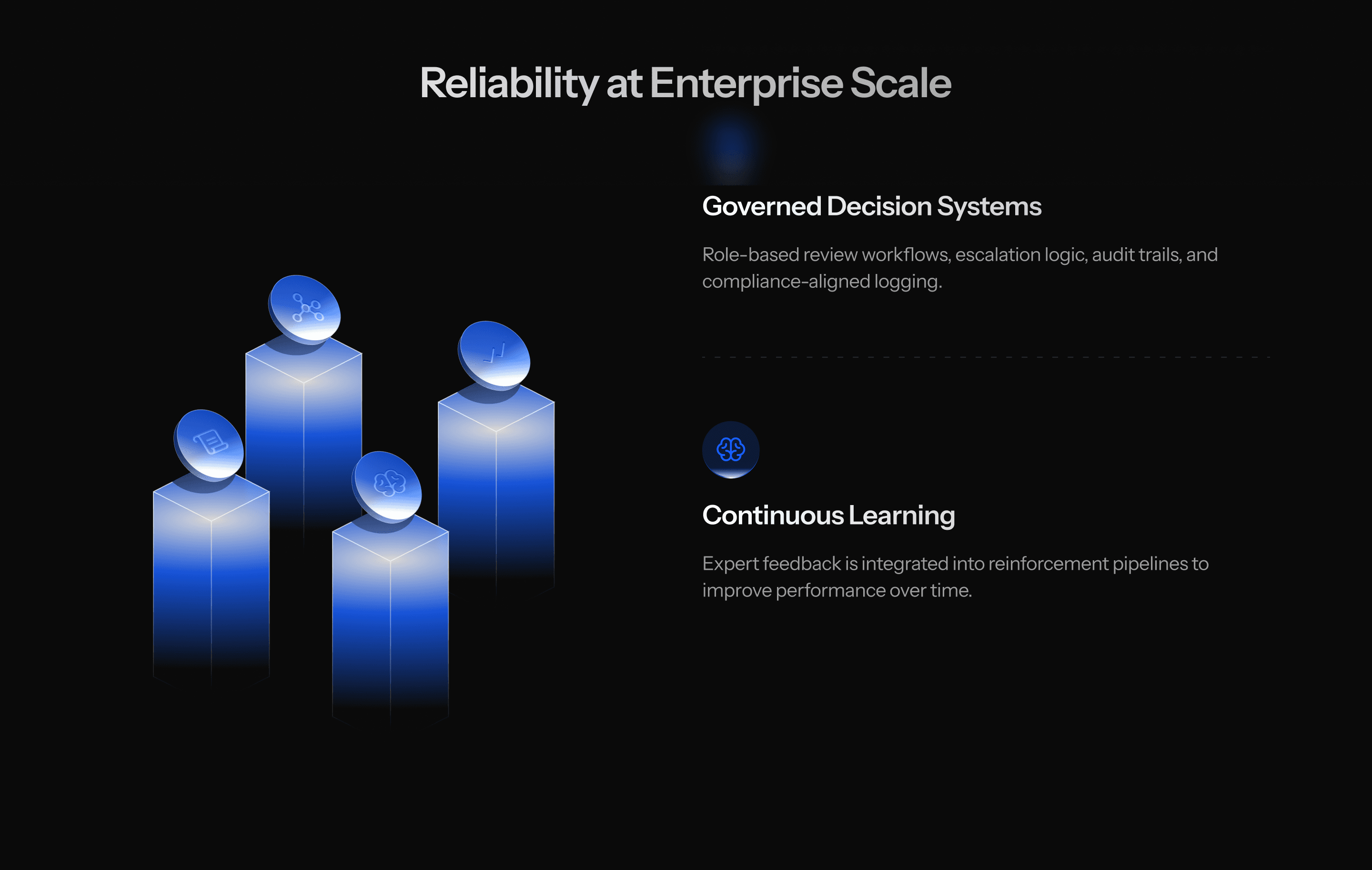
The Technical DNA section was the hardest to design well. Four capabilities — multi-model orchestration, evaluation infrastructure, governed decision systems, continuous learning — that could easily become a wall of text.
We broke these into distinct visual cards with clear labels and one-line descriptions. No paragraph explanations. No jargon-heavy tooltips. The design does the heavy lifting: visual hierarchy signals what's important, spacing creates breathing room, and consistent card structures let the reader compare capabilities at a glance.
Prove → Scale → Compound:
An Objection Handler Disguised as a Product Section
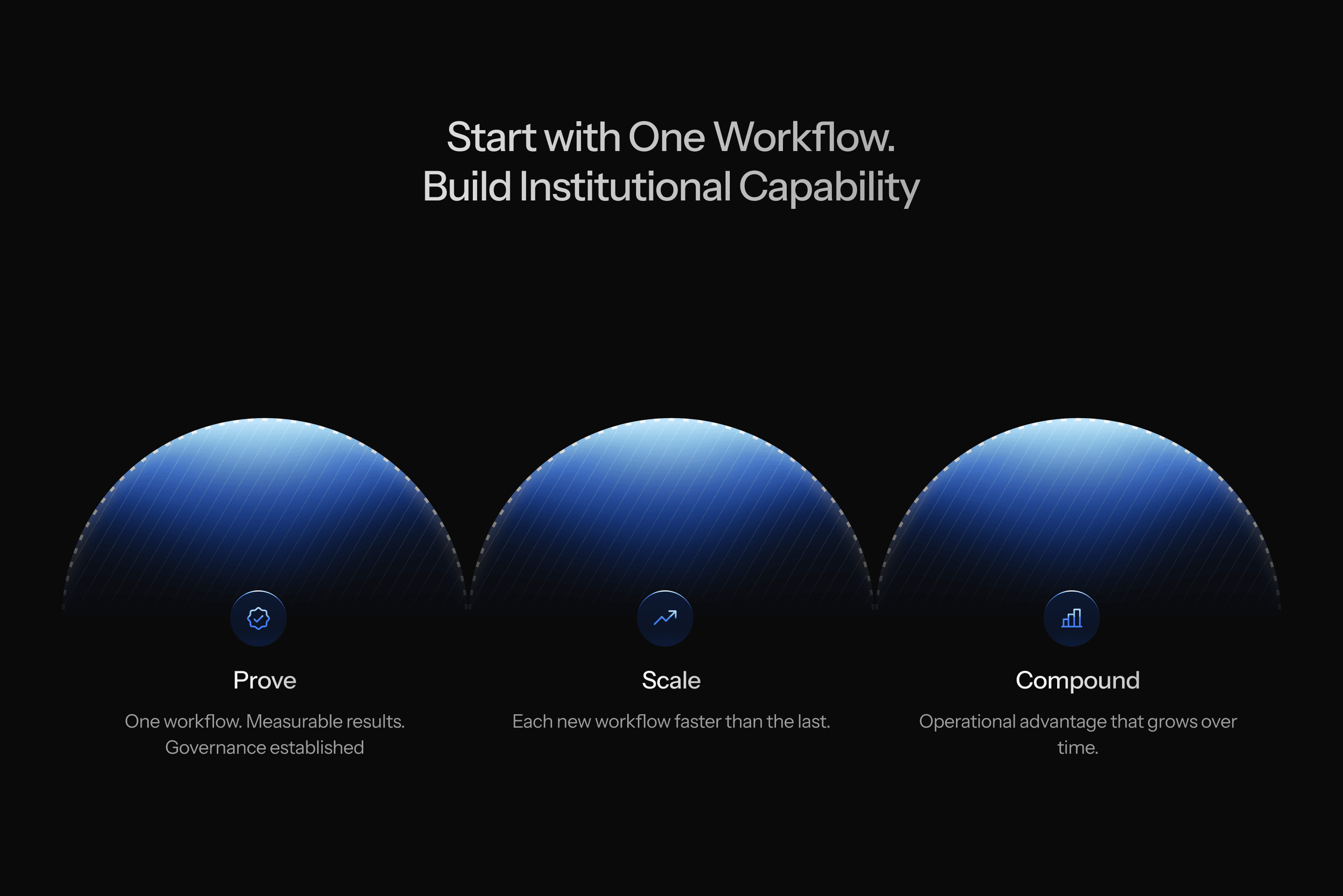
One of the more intentional design decisions: the Prove → Scale → Compound adoption path.
This isn't just a feature section. It's a buying objection handler disguised as a product section. Enterprise buyers worry about risk. They don't want to commit to a platform overhaul on day one. This section tells them: start small, prove value on one workflow, then expand.
We designed it as a visual progression, three stages, each building on the last so the reader feels the momentum without being asked to commit to everything at once.
SOC2 Isn't a Footnote
When Your Buyer Works in Regulated Industries
Enterprise credibility isn't built through testimonials alone. It's built through specificity.
We designed the trust layer to include:
Named logos (Google, Snowflake) — not a wall of logos, but specific, recognizable names
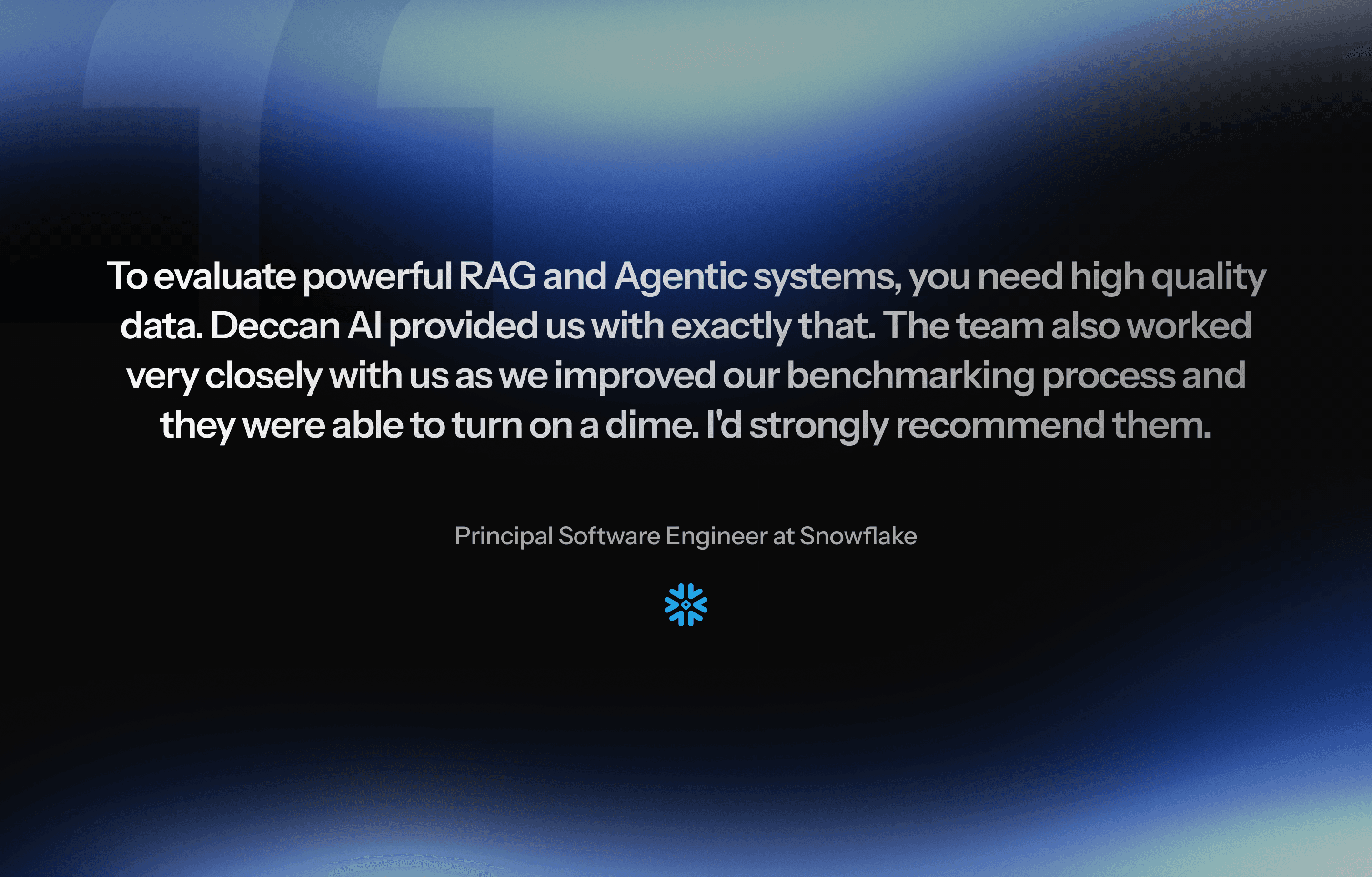
A real testimonial from a Snowflake Principal Software Engineer with name and title, not anonymous praise
Certifications front and center, ISO 27001, SOC2, GDPR, HIPAA. For regulated industries, this isn't a footnote, it's a gate.
Operational scale — 120+ person team, 25,000 sq ft secure facility. These aren't vanity metrics for enterprise buyers — they're proof that the company can handle production workloads.
Reach out to us
puru
@37degr.ee
Founder & Designer
haneef
@37degr.ee
Product Strategist

Crafted with

by 37 degree
©2025 37. All rights reserved.